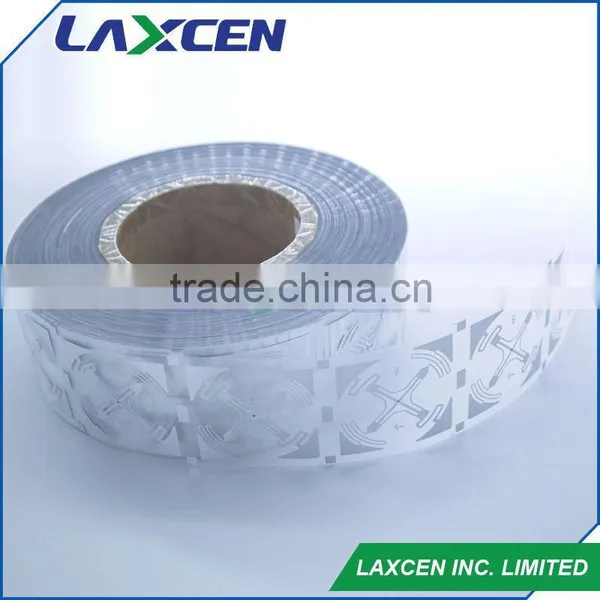
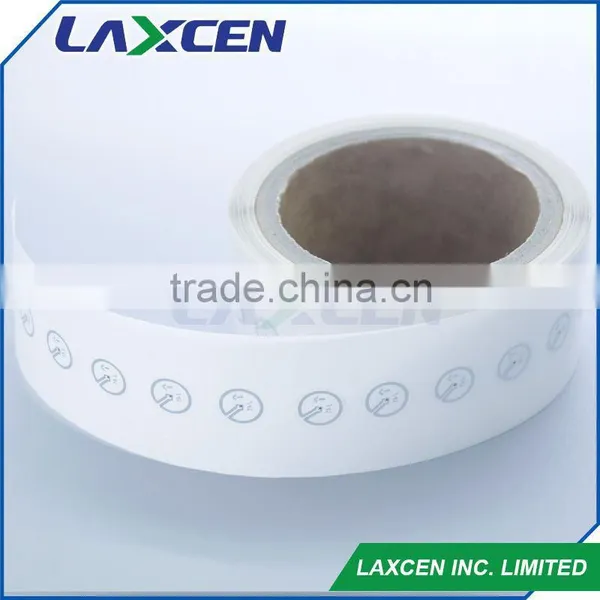
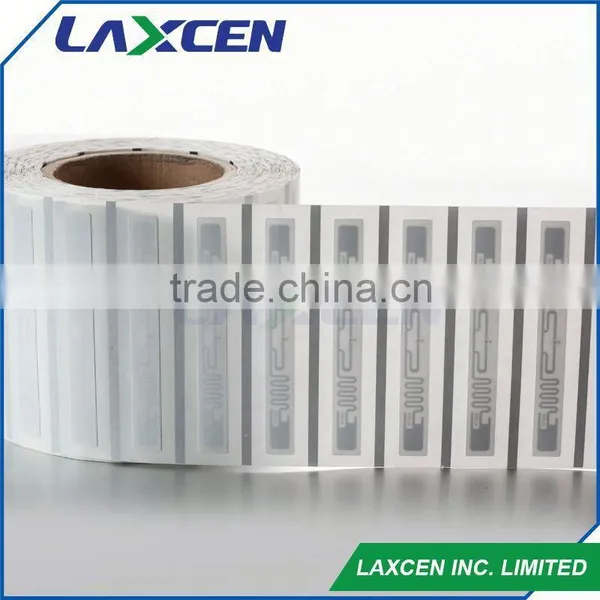
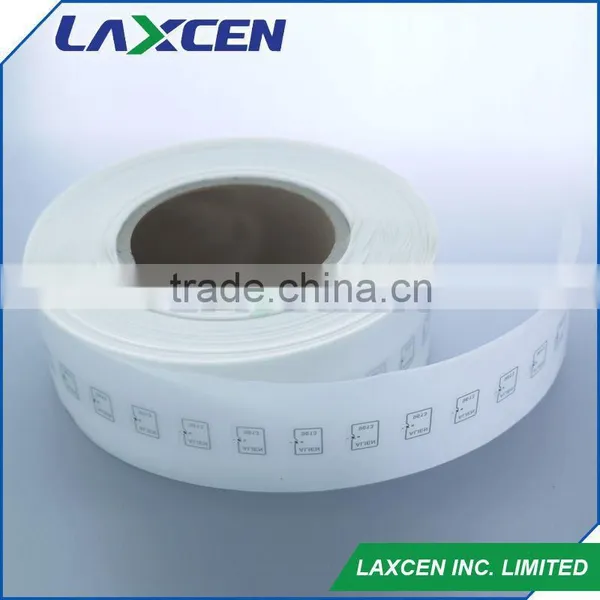
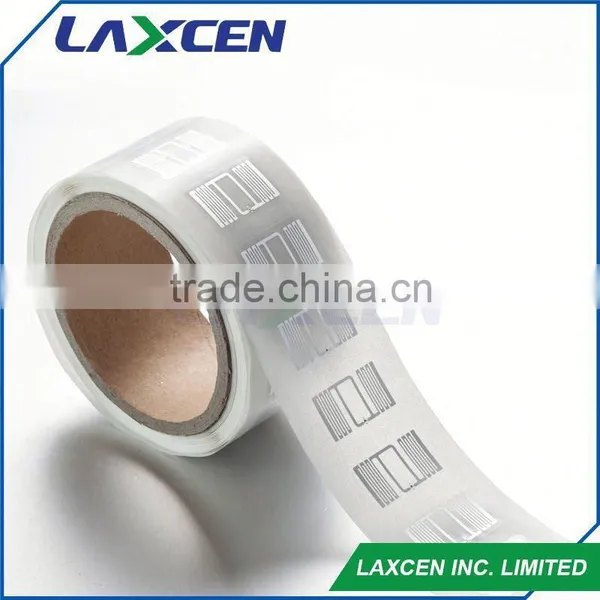
Ultra-Thin Flexible RFID Library Tags:Substrate & Adhesive Selection for Heavy Circulation Wear
Introduction
Modern library management relies heavily on intelligent identification and automated circulation systems to streamline book borrowing, returning, inventory checking, and anti-theft monitoring. Ultra-thin flexible RFID tags have gradually replaced traditional rigid barcode labels and thick RFID strips, becoming the core carrier of smart library construction. Different from ordinary industrial RFID tags, library tags face long-term and frequent mechanical wear in heavy circulation scenarios, including repeated book bending, page flipping, extrusion, friction, and daily environmental erosion such as temperature changes and slight humidity fluctuations.
The service life and identification stability of RFID library tags are largely determined by two core components: the flexible substrate and the surface adhesive. Improper material selection will lead to common failures such as tag warping, peeling, antenna fracture, and invalid reading, increasing library maintenance costs and affecting circulation efficiency. This blog will deeply analyze the selection logic of substrates and adhesives for ultra-thin flexible RFID library tags, and summarize material matching schemes suitable for heavy circulation wear scenarios.
Core Challenges of RFID Tags in Heavy Library Circulation Scenarios
Library book circulation has unique application characteristics that put forward strict requirements for ultra-thin flexible RFID tags. First of all, books are frequently bent and folded during reading and sorting, so the tags must have excellent flexibility and tensile resistance to avoid internal antenna and chip damage. Secondly, high-frequency manual sorting, machine scanning and stacking will cause continuous friction and extrusion on the tag surface, requiring strong wear resistance.
In addition, library tags need long-term hidden attachment on book spines, inner pages and covers, which requires ultra-thin thickness without affecting book appearance and reading experience. Meanwhile, the tags need to adapt to indoor temperature and humidity changes all year round, resisting aging, degumming and warping. Unlike static asset tags, library RFID tags are in a dynamic wear state for a long time, making material selection the key to long-term stable operation of the entire intelligent circulation system.
Substrate Selection for Ultra-Thin Flexible RFID Library Tags
The substrate is the base carrier of the RFID tag antenna and chip, undertaking the functions of supporting circuit structure, resisting external force damage and insulating protection. For heavy circulation library scenarios, substrate selection needs to balance ultra-thin thickness, flexibility, wear resistance, aging resistance and cost. The three most mainstream and practical substrate materials are PET, PVC and special flexible polymer substrates.
1. PET Substrate (Preferred for Standard Heavy Circulation)
PET (Polyethylene Terephthalate) is the most widely used substrate for high-quality ultra-thin library RFID tags. With ultra-thin forming thickness (usually 20–50μm), it meets the hidden pasting demand of books without bulging or warping. It features high tensile strength, excellent bending fatigue resistance and surface wear resistance, and can withstand tens of thousands of repeated bending and friction in long-term book circulation without cracking or deforming.
In terms of environmental adaptability, PET substrate has stable chemical properties, good moisture-proof and temperature resistance, and is not easy to age and yellow in long-term indoor storage, effectively avoiding tag performance degradation caused by environmental changes. In addition, PET material has good printing and circuit attachment performance, which can firmly fit RFID antenna circuits and ensure stable signal transmission. It is suitable for most conventional books and periodicals with heavy circulation and is the cost-effective preferred substrate for public and university libraries.
2. PVC Substrate (Economical Universal Option)
PVC substrate has the advantages of low cost, good flexibility and easy processing, and is often used in lightweight and medium-circulation library tag scenarios. It is softer than PET, has good fitting performance for curved book spines, and will not produce hard edges to scratch book pages. However, compared with PET, PVC has weaker wear resistance and fatigue resistance. Under long-term high-frequency friction and repeated bending, it is prone to surface wear, substrate crease and even local fracture.
Its temperature aging resistance is also slightly insufficient, and it is easy to soften and degummed in high-temperature and high-humidity environments. Therefore, PVC substrate is more suitable for libraries with limited budgets and medium circulation pressure, and is not recommended for core book areas with ultra-high daily borrowing volume.
3. Advanced Flexible Polymer Substrate (High-End Scenario Customization)
For rare books, hardcover collections and high-value books with ultra-high circulation frequency and preservation requirements, advanced flexible polymer substrates such as PDMS and modified composite flexible materials can be selected. Such substrates have ultra-high flexibility, tear resistance and invisible fitting performance, with ultra-thin and soft texture, which will not damage the book binding structure and appearance.
They have outstanding fatigue wear resistance, can resist extreme repeated bending and long-term extrusion, and have super aging and corrosion resistance. Although the cost is higher, they can greatly extend the service life of tags for high-value library collections, reducing frequent replacement and maintenance costs, and are the optimal choice for high-end library asset management.
Adhesive Selection for Heavy Circulation RFID Library Tags
The adhesive determines the bonding firmness between the RFID tag and the book surface, and is the key to prevent tag peeling and warping in heavy circulation. Library tag adhesives need to meet three core indicators: high bonding stability, no damage to books, and wear and aging resistance. According to the circulation intensity and book type, they are divided into permanent high-tack adhesive and removable high-resistance adhesive.
1. Permanent High-Tack Adhesive (For Long-Term Fixed Labeling)
Permanent high-tack adhesive is specially developed for heavy circulation conventional books. It has strong initial adhesion and lasting bonding force, and can be firmly attached to book paper, coated paper, hardcover leather and other different surfaces. It has excellent shear resistance and friction resistance, and will not fall off or warp due to frequent book flipping, sorting and extrusion.
This adhesive has good temperature and humidity aging resistance, stable bonding performance in long-term indoor environment, and is not easy to degum and fail. It is suitable for ordinary circulating books that do not need tag replacement in the short term, effectively reducing the failure rate of tags in high-frequency circulation and ensuring the continuity of library intelligent management data.
2. Removable High-Resistance Adhesive (For Premium & Recyclable Books)
For hardcover books, precious collections and books that need regular tag replacement and secondary processing, removable high-resistance adhesive is the ideal choice. Different from ordinary weak adhesive, this upgraded adhesive balances wear resistance and removability. It maintains stable high-strength bonding during daily heavy circulation friction and bending, and will not peel off automatically.
When the tag needs to be replaced, it can be completely torn off without residual glue, and will not damage book covers, paper textures and printing layers. It solves the pain points of traditional removable adhesive with poor wear resistance and easy falling off, and is perfectly adapted to the refined management of high-quality library resources.
Optimal Material Matching Scheme for Heavy Circulation Library Tags
Combined with the actual operation scenarios of libraries, we have sorted out the most practical substrate and adhesive matching schemes for reference:
For conventional mass circulating books (high daily borrowing volume, frequent friction and bending): PET ultra-thin substrate + permanent high-tack adhesive. This scheme balances wear resistance, stability and cost, and is the most widely applicable and reliable matching mode.
For medium-circulation ordinary books (limited budget, general wear demand):PVC flexible substrate + standard permanent adhesive. It meets daily circulation management needs and reduces overall procurement costs.
For high-value hardcover books and rare collections (high preservation requirements, low replacement frequency): advanced flexible polymer substrate + removable high-resistance adhesive. It realizes invisible and damage-free labeling while ensuring long-term wear resistance.
Conclusion
The stable operation of ultra-thin flexible RFID library tags in heavy circulation scenarios depends on scientific substrate and adhesive selection. The substrate determines the anti-wear and anti-fatigue basic performance of the tag, while the adhesive guarantees the long-term bonding stability in frequent circulation. In actual library intelligent construction, it is necessary to select targeted material matching schemes according to book value, circulation frequency and management demands.
Reasonable material selection can effectively reduce tag failure rate and library maintenance cost, extend tag service life, and give full play to the advantages of RFID technology in improving library circulation efficiency, inventory accuracy and intelligent management level.
Recently Posted
-
HF vs UHF RFID Jewelry Tags: Comparison for Retail Showroom and Warehouse Storage
August 27, 2026IntroductionThe luxury jewelry industry relies heavily on precise inventory control, anti-loss management, and efficient operational workflows. High-value jewelry items are small, delicate, and prone to misplacement or theft, making traditional manual counting and barcode scanning inefficient and error-prone. RFID (Radio Frequency Identification) technology has become a mainstream solution for jewelry retail and warehousing,Read More -
Tamper-Evident RFID Jewelry Tags: Ultimate Solution to Prevent Jewelry Swap & Theft
August 27, 2026The fine jewelry industry faces unique and persistent security challenges every single day. From retail showrooms and custom jewelry studios to pawn shops and luxury jewelry warehouses, high-value rings, necklaces, bracelets, and earrings are vulnerable to two major risks: internal and external theft, as well as item swapping fraud. Traditional security measures such as surveillance cameras, manual inventory checks, and simplRead More -
Tamper-Resistant HF RFID Book Tags: Elevating Library Anti-Theft and Repeated Inventory Efficiency
August 27, 2026IntroductionModern libraries face two persistent operational challenges: preventable book loss and time-consuming manual inventory counting. Traditional security solutions, such as electromagnetic (EM) strips and basic barcode labels, can no longer meet the needs of smart library management. EM strips only support single anti-theft functions without data tracking capabilities, while barcodes require one-by-one manual scanningRead More -
Key Selection Criteria for Passive UHF Windshield RFID Tags|Chip, Adhesive, Temperature & Protocol
August 27, 2026IntroductionPassive UHF windshield RFID tags have become the core identification component for modern vehicle management systems, covering automatic toll collection, parking access control, fleet tracking, and intelligent traffic monitoring. Unlike ordinary paper UHF RFID tags, windshield-mounted tags face complex and harsh application scenarios, including long-term outdoor exposure, extreme temperature fluctuations, glass diRead More

Contact Us

Recommended Products
-
 2016 New Design RFID Windshield TagUS$ 0.1 - 0.35MOQ: 1 Piece
 -
Professional Mould Design Impinj m4 Rfid LabelUS$ 0.07 - 0.15MOQ: 1 Piece
-
Waterproof Washable Rfid Tags Rfid Sticker Tag Printing & Encoding Service N9US$ 0.05 - 0.15MOQ: 2000 Pieces
-
Custom Passive Programmable Impinj UHF RFID Label E44US$ 0.05 - 0.15MOQ: 2000 Pieces
-
ISO18000-6C Impinj Uhf Rfid Tags Label,uhf Rfid Tags Label,uhf Rfid TagsUS$ 0.05 - 0.05MOQ: 1 Piece
-
Long Read Range UHF Rfid TagUS$ 0.05 - 0.15MOQ: 2000 Pieces
-
Top Quality , General-purpose RFID Inlay , RFID TagUS$ 0.07 - 0.15MOQ: 2000 Pieces
-
Full-Specturm of UHF RFID RFID InlayUS$ 0.05 - 0.15MOQ: 1 Piece
-
Top Selling Rfid Uhf Rfid Label Printing & Encoding Service Laxcen--9662US$ 0.05 - 0.15MOQ: 2000 Pieces
-
UHF Rifd Tag , Rfid Inlay Manufacturer With 10 Years ExperienceUS$ 0.05 - 0.15MOQ: 2000 Pieces
-
Free Sample Impinj Monza 4E UHF RFID Tag RFID Inlay F43US$ 0.05 - 0.15MOQ: 2000 Pieces
-
High Quality EPC Class 1 Gen2 Rfid Tag , Laxcen With Impinj Authorized E53US$ 0.05 - 0.15MOQ: 2000 Pieces
-
Top Quality , UHF RFID Tag , Alien h3 Rfid TagUS$ 0.05 - 0.15MOQ: 1 Piece
-
Best Selling UHF RFID Inlay Label EPC C1 Gen2 E70US$ 0.05 - 0.15MOQ: 2000 Pieces
-
Top Selling, High Quality, UHF RFID Tag Label Manufacturer With 10 Years Experience Alien 9620US$ 0.05 - 0.15MOQ: 2000 Pieces
-
Best Seller With Hot Product Rfid Tag ,rfid Inlay ,wet Inlay ,from Laxcen H42US$ 0.05 - 0.15MOQ: 2000 Pieces
-
Small Size Top Quality RFID Tag,100% Qualified Product J41US$ 0.05 - 0.15MOQ: 2000 Pieces
-
Top Selling, High Quality, UHF RFID Tag Label Manufacturer With 10 Years Experience Alien 9640US$ 0.05 - 0.15MOQ: 2000 Pieces
-
ALN 9613 Best Selling, High Quality, UHF RFID Tag Label Manufacturer With 10 Years Experience Alien 9613US$ 0.05 - 0.15MOQ: 2000 Pieces
-
Custom UHF RFID Label Manufacturer With 10 YearsUS$ 0.05 - 0.15MOQ: 2000 Pieces